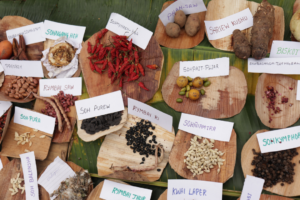
When you think of fresh vegetables in Shillong, you think of Iewduh, the largest traditional marketplace in Meghalaya, where every morning, vendors and farmers from all over the state arrive with baskets of fresh fruits, vegetables and wild herbs. The narrow lanes at Iewduh often feel like a convergent point where produce from every garden and farm in Meghalaya is sold.
But beneath the fresh vegetables and the luxury of choices we get, there is often an underlying issue of spoilage and loss, which the farmers bear. Many small farmers from villages sell their produce at a significantly lower price, incurring losses and spoilage, due to the absence of a defined food segregation system and disparities in market access.
The FAO’s SDG Progress Report 2023 reports that an estimated 13% of food was lost globally after harvest and before reaching retail shelves in 2021. This trend is also evident in Meghalaya, discouraging many small farmers from growing more crops beyond their household needs.
However, in October last year, a small village 36 kilometres away from Shillong called Nongwah came up with a smart solution that may hold the key to solving the issue of spoilage and help farmers generate fairer prices.
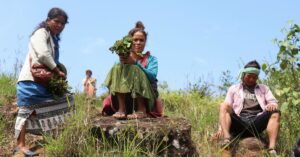
For a long time, the people of Nongwah focused on farming for their livelihood, often supporting this with work under government schemes like MGNREGS. Ever since NESFAS started partnering with the community in 2015, a focus on local leadership and women’s participation has been advocated, and as such, women played a central role in managing land, saving seeds, and preserving traditional crop varieties. Yet, despite this dedication, they faced a significant challenge after the harvest.
The problem was not the production of crops, and the farmers of the community grew a wide variety of organic vegetables, tubers, and fruits. The biggest challenge was in storage, sorting, and reaching the market. Without proper facilities, farmers had to harvest perishable items like leafy greens just a day before the weekly market, and unsold produce spoiled quickly because there was no cooling or storage in their homes.
Market access was another barrier. While an organic stall was started by the women members at the Tyrsad weekly market in 2022, the larger markets in Shillong were too expensive to reach individually. High transport costs, small harvest volumes and reliance on middlemen left farmers with little power to negotiate prices. They often sold individually at a loss, which prevented the village from expanding its income despite its reputation for chemical-free farming. These major deterrents prevented farmers from growing more produce despite the growth potential.
The turning point for the village came in 2025 when 16 women from the Nongwah Primary Agroecology Cooperative Society began meeting to plan and design interventions that would help transform their produce into more sustainable sources of income. They identified that the most viable solution was to create a dedicated centre for sorting and storing produce of the community members. A place where they could collect, sort, and sell their produce together in bulk to help manage and market their produce more efficiently.
On October 10, 2025, the vision of the group became a reality with the opening of the Nongwah Product Segregation Centre in Tyrsad village, a neighbouring village with an existing market. Supported by NESFAS and the LIC HFL CSR Project, the centre is located at the market site and aims to solve several problems at once. The shared commitment to community objectives and collective well-being is further reflected in the spirit of sharing and care demonstrated by Mrs. Siyoka Sawkmie, a member of the Cooperative Society and owner of the building site, who made the space available for a minimal annual contribution of ₹2,000 instead of charging commercial rent.
The centre allows farmers to drop off produce two or three times a week before being sorted by type and quality to keep them fresh. Once a week, a local driver takes the combined load to Shillong to be sold. The cooperative pays for transport at a low rate of ₹1 per kilogram. This system allowed every farmers’ produce to reach the city markets without the farmers going themselves.
In just the first month of operation, the early results were extremely positive. Small amounts of peas, beans, radish, cucumber, mustard leaves, and potatoes were sold at stable prices. Although the monetary return is negligible for now, the initiative has already begun to make a meaningful impact on the community, fostering stronger cooperation among farmers, encouraging active community participation, and reinforcing a sense of shared responsibility.
“We feel that we’re not losing our harvest to spoilage or unfair prices,” remarked Kong Stialinda Khasain, member of the Nongwah Cooperative Society. She also shared the optimism the group had for the growth of the initiative, citing a recent inquiry for bulk orders of fruit crops: “Recently, a proprietor from the Sohra region has expressed willingness to source fruit crops from the farmers for value-added processing, according to the capacity and requirements of the centre. These are early signs for further growth,” Kong Stialinda said.
Looking forward, the Nongwah Primary Agroecology Cooperative Society has plans for the centre to become a full organic hub, expanding to include local fruits like sohiong (Khasi cherry), sohlyngdkhur (Mulberry), sohbrab (Passion fruit), sohphie (Bay berry), and sohplum (Plum). With new agreements and a step-by-step growth strategy, they aim to increase income while protecting the environment.
The centre has quickly become a symbol of progress, showcasing how collective efforts and simple innovations can improve livelihoods and contribute to a more sustainable and resilient food system. Through collaborative efforts with NESFAS and the support of NESFAS and LIC HFL CSR, Nongwah community has achieved an important milestone towards strengthening local livelihoods and Indigenous Peoples’ food systems.