“A bird finds safety in its nest; therefore, protecting and preserving nests is essential. When birds thrive, our agriculture flourishes, and the ecosystem remains healthy and alive,” said Bah Niren Pambah, community member, Lalumpam.
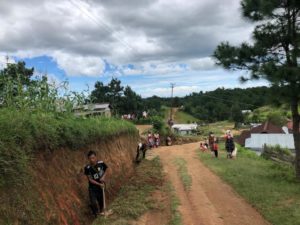
Across rural landscapes, bird populations are steadily declining as their habitats are lost due to increasing land-use pressures. Trees, which provide the most suitable natural habitats for birds, are increasingly being lost. In Lalumpam, a village in Ri-Bhoi with 59 households, the felling of large rubber trees that once supported nesting spaces disrupted local bird diversity and threatened the ecological balance of the community forest.
During the People’s Perspective Landscape Management Plan (PPLMP) sessions facilitated by NESFAS under the initiative supported by The Nature Conservancy (TNC), the Lalumpam community reviewed information related to their local biodiversity and natural resources. These discussions provided an opportunity for community members to better understand the condition of their surrounding ecosystems and identify priority areas requiring conservation and restoration.
During the session, the community highlighted the importance of protecting bird species found within their community forest. The community observed that changes in the local environment were gradually affecting bird habitats, making it necessary to take proactive steps to support their conservation.
Recognising the urgency of the situation, the community incorporated this concern into their PPLMP. The Biodiversity Management Committee (BMC), together with the Executive Committee, proposed installing bird nests within the community forest as a practical step to create safe spaces for birds to rest and breed.
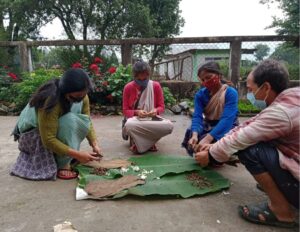
Before implementing the activity, community members convened a planning meeting in collaboration with the BMC to collectively assess the ecological challenge and design an appropriate intervention. As a collective decision, the committee agreed to use locally available materials to construct wooden nest boxes, including plywood, pine, teak, sal, jackfruit and mango wood planks, as well as square oil tin cans, plain tin sheets and cardboard. This approach ensured the initiative remained practical, sustainable and community driven.
Through this coordinated effort, the community successfully installed 68 bird nests across the forest area, demonstrating strong collective ownership and a shared commitment to conserving local biodiversity.
“As women working in the fields, hearing birds chirping gives us a sense of safety. The birds also signal when it is time to return home, and this initiative reminds us that nature plays a vital role in our lives,” said Kong Bioly Damlong, community member, Lalumpam.
The initiative has also strengthened community awareness about the importance of living in harmony with nature. By involving elders, women and youth in conservation activities, the effort reinforces shared responsibility for protecting natural resources and sustaining the ecological balance of the landscape.
The community has already observed several bird species, including doves, parrots, pigeons, hummingbirds and woodpeckers, using or entering the newly installed nests, indicating promising early results of the intervention. Building on this progress, the BMCs, together with community members, plan to regularly monitor and maintain the bird nests. This includes conducting periodic inspections to ensure the nests remain in good condition, repairing or replacing damaged structures using locally available materials and documenting bird activity to assess long term effectiveness.
Aniket Syiem, a youth from the community, expressed that without birds, green forests would lose their true meaning, and human life would struggle to thrive in a barren and lifeless environment.
Healthy bird populations play an essential role in maintaining ecosystem balance. Birds contribute to natural pest control, seed dispersal and overall forest health functions that directly support agricultural productivity and strengthen local food systems. By restoring habitats, the community is also enhancing climate resilience, as diverse ecosystems are better able to adapt to environmental changes.
The bird nest initiative in Lalumpam stands as a powerful example of how community driven action can transform environmental concern into meaningful conservation efforts. By creating safe nesting spaces for birds, the community is not only restoring biodiversity but also strengthening the ecological relationships that sustain forests, agriculture and rural livelihoods.
As the community continues to monitor and care for the nests, this initiative highlights how collective action and locally driven solutions can contribute to healthier ecosystems, resilient landscapes and a more sustainable future.