Written by Bajanai Diengdoh & Pyniarbor Kharshiing
A young girl sat under a broken umbrella, sharing her lunch with a dog by her side. On her plate was a simple yet nourishing meal of rice, boiled vegetables and wild edibles like fish mint gathered from the nearby forest. Her smile carried a mix of joy, warmth and simplicity, a quiet reminder of how something as small as a plate of food can bring comfort, care and hope. In that moment, we saw what school meals truly meant. This reflects the deeper story of Itsohpair, a village that has transformed the idea of school meals into a community-driven movement for sustainability and growth.
It is in this very spirit that Itsohpair stands out as a vibrant village of 135 households with a population of 858 people. The community is home to two schools, Itsohpair LP School and Madanjyrlud Presbyterian LP School that nurture its young learners. As part of LIC HFL CSR “Special Project in East Khasi Hills and Ri-Bhoi,” Itsohpair has become a key NESFAS partner village focused on strengthening community-led development and sustainability. Building on lessons from indigenous peoples’ food systems (IPFS) and strong collaborations formed through earlier agroecology and food systems initiatives, NESFAS deepened its efforts in the village to support nutrition and farmers’ livelihoods. Recognising these deep local connections, NESFAS later brought in LIC HFL through its CSR initiative to further enhance these goals.
Before the project began, school meals at Madanjyrlud Presbyterian LP School were served only once a week, usually consisting of rice, dal, and eggs. Most of the ingredients were sourced from local markets, with minimal community involvement, and meals lacked diversity and nutritional balance. Drawing from these insights, NESFAS drew valuable lessons from the pilot school meals initiatives previously implemented in 11 schools to name a few Laitsohpliah RCLP/UP School, Subakalai SSA School, Dewlieh Government LP School, Nongtraw Government LP School & Mawmihthied Government LP School. These pilots demonstrated which approaches were most effective in improving children’s nutrition, strengthening community involvement and integrating locally available food resources into daily meals.
Then,NESFAS and LIC HFL held discussions with the community of Itsohpair to explore practical ways to enhance nutrition for school-going children while also supporting local livelihoods.
As the community-led, nature-based school meals approach began taking shape in Itsohpair, NESFAS also strengthened the capacities of the school cooks to ensure that the new model could be implemented effectively. As part of the PM Poshan programme, supported by the Directorate of School Education and Literacy (DSEL) the cooks received practical training to make meals more nutritious and diverse. They learned about portion sizes, nutrition and the use of local ingredients guided by FAO’s 10 food group concept. Through these sessions, the cooks discovered new ways to combine seasonal and locally grown produce to prepare meals that were not only healthier but also more enjoyable for the children.
The school meals programme initiative addressed multiple needs of children, cooks and farmers. For children, it meant receiving wholesome and diverse meals every day, replacing the earlier routine of simple meals. The menu now features locally grown vegetables and wild edibles such as fish mint, water celery, adding richness to their diet while supporting better concentration and overall health. Through this effort, the diversity of food served has increased from 3-5 food groups, marking a significant step towards improved nutrition.
“As for me, I am truly grateful to NESFAS for helping provide nutritious food for the children using ingredients available locally. This allows us to prepare meals that help them grow strong and also teaches them the habit of eating properly at home. Even if they sometimes skip meals, they now understand the importance of eating a variety of foods because of what they have learned at school. I feel deeply blessed and thankful for this”, shared Kong Lidian Khongjoh, parent, Itsohpair.
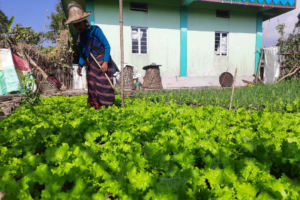
To ensure a steady supply of fresh produce, NESFAS facilitated a partnership between the Itsohpair Primary Agroecology Cooperative Society and the school, helping streamline the procurement of fresh, locally sourced ingredients for school meals. Through this collaboration, the cooperative supplies a range of vegetables and wild edibles such as fish mint, water celery, radish leaves, pumpkin, cucumber and french beans so that nutritious food reaches the school consistently.
As for farmers, this collaboration has created a local market to sell their produce directly to the school, with eight farmers now contributing around 40 per cent of the food items used in school meals.
The project also helped upgrade the Itsopair Agroecology Learning Circle (ALC) into the Primary Agroecology Cooperative Society, which now serves as a crucial link between local farmers, the school and the community. Through structured procurement and transparent coordination, the cooperative ensures a steady supply of fresh local produce, making school meals more regular and community-driven.
The initiative has evolved into a holistic model benefiting students, farmers and the wider community.
One of the major challenges the community faces is seasonality. Wild edibles such as water celery and fish mint, valued for their distinct flavours and nutritional benefits, are available only during certain times of the year. Farmers, too, experience fluctuating harvests, with abundance in the summer but scarcity in winter, making it difficult to maintain a steady supply and fair prices. To address this, the community, with NESFAS support, has begun mapping a seasonal food calendar and co-developing sustainable harvesting protocols. This ongoing process helps identify seasons of abundance, promote better crop planning and ensure wild edibles are gathered responsibly to protect the ecosystems.
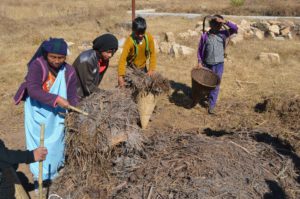
Another concern is the shortage of firewood for cooking. Since many households rely on biomass, it becomes difficult to find enough fuel, especially during the rainy months, which often slows down meal preparation for the school. Heavy rainfall also affects crops at their early growth stages, damaging plants and reducing the amount of fresh food that reaches the school kitchen.
To address these challenges, the community and parents are developing local support systems and exploring sustainable solutions, such as firewood and fresh food supply models piloted in other schools to ensure consistency. Despite these constraints, the initiative continues to thrive through strong coordination among the cooperative, NESFAS, LIC HFL and the school, working together and staying responsive when issues arise.
“I’m thankful for everyone who came together to make this change happen. Our children now have regular meals with fresh vegetables, and we can see how their health and energy have improved. It has truly strengthened our community,” shared parent Aibarilang Kshiar.
The journey of Itsohpair shows how true change begins when a community comes together around a shared goal. What started as a simple effort to improve school meals has grown into a model of resilience, sustainability and unity. By strengthening local food systems, empowering farmers and nurturing children with nutritious meals, the initiative has laid a strong foundation for long-term well-being.
With the continued support of LIC HFL CSR and NESFAS, Itsohpair stands as a shining example of how a community can work together to make lasting change, feeding children, supporting local farmers, keeping traditional knowledge alive and inspiring other villages to build a healthier, more self-reliant future.