Co-written by Naphishisha Nongsiej, Associate, NESFAS
Community values of sharing and caring remain strong among Indigenous communities in Meghalaya. Even as the world changes rapidly, traditions of mutual support, collective responsibility and respect for nature continue to guide everyday life. In Jatah Lakadong village of East Khasi Hills, these values are not just ideals; they are practised in simple but powerful ways that strengthen food security and community well-being.
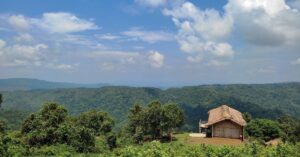
Jatah Lakadong, a village, Meghalaya, is home to about 1,405 people across 235 households. Agriculture forms the backbone of local life. Most families practice bun or raised-bed farming, an improved alternative to shifting cultivation. Crops such as potatoes, taro, French beans, peas, pumpkins and other vegetables are commonly grown, along with produce from homestead gardens and wild edibles collected from nearby forests.
Despite their deep agricultural knowledge, households in the village face many challenges. Single mothers and elderly families often struggle to maintain kitchen gardens because farming requires heavy labour. Crops are frequently damaged by free-ranging livestock, and unpredictable rainfall caused by climate change affects yields. These difficulties have forced some households to depend more on market-purchased vegetables, reducing dietary diversity and increasing expenses. Limited gardening space and lack of labour have therefore weakened both nutrition and self-sufficiency.
To address such challenges, NESFAS partnered with Jatah Lakadong in 2021 to strengthen local food systems and revive kitchen gardens through agroecological practices. Later, these efforts were further supported under a project funded by LIC HFL CSR Special Project in East Khasi Hills & Ri-Bhoi in 2025, which focused on promoting community-led action, women’s leadership and solidarity-driven solutions for better nutrition and livelihoods.
During the early stages of the programme, NESFAS identified Kong Antilest Suting as a dedicated farmer and active community leader. She serves as an ASHA worker and is highly respected in the village. Her concern for community health and food security made her a natural choice to become a Community Facilitator for the project.
As part of the project, household campaigns were led by Kong Anitilest. Through campaigns and regular interactions, families received technical guidance on intercropping, composting and the use of bio-inputs. This participatory approach built trust and confidence among community members and encouraged collective responsibility for food production.
In one of the household visits, Kong Antilest met two single mothers who were struggling to grow food due to a lack of labour and land. Understanding their situation, she and her husband decided to offer a portion of their own land, around 1,500 sq ft, for the two women to cultivate vegetables. Before taking this decision, she visited the women several times, listened to their difficulties and ensured they were willing and able to manage the plots.
The shared land soon became a source of fresh and diverse food. The two households cultivated potatoes, radishes, sweet potatoes, mustard leaves, French beans, peas, pumpkins, cucumbers, garlic chives, water celery, centella and Gynura. Access to these vegetables improved dietary diversity and reduced dependence on the market. More than that, the initiative strengthened solidarity within the village. By sharing land and knowledge, Kong Antilest showed how compassion and cooperation can directly improve community nutrition and livelihoods.
Kong Antilest stated, “In our village, we have always believed in sharing and caring for others in every way possible. Since we have sufficient land for our own needs, we see no reason not to share it with those who need it more. Through the NESFAS initiative, this spirit of collective support ensures that each household feels secure and has enough for self-consumption.”
The LIC HFL CSR-supported project placed strong emphasis on women-led agroecological solutions. This approach helped connect local farming efforts with broader goals of nutrition, income and resilience. Through this support, the initiative addressed social, economic and nutritional needs at the same time.
However, several risks remain. Crop damage by free-ranging animals, climate change impacts on yields and the gradual loss of traditional seed varieties continue to threaten local food systems. While Kong Antilest faced little personal risk in sharing her land, the long-term success of such efforts depended on continued community cooperation, fair access to resources and collective action. Village-level fencing, seed conservation and climate-resilient farming practices will be important to sustain these gains.
Under the initiative, the two women worked together on the shared plot using intercropping and composting methods. Kong Antilest’s husband helped with land preparation, while the women took responsibility for planting, maintenance and harvesting. Throughout the process, Kong Antilest acted as a mentor, providing guidance and encouragement. NESFAS facilitated training, monitoring and farmer-to-farmer learning exchanges, which helped the women gain skills and confidence to continue independently.
The results were encouraging. Each crop grown on the plot yields well ensuring a steady supply of fresh vegetables for household use. Inspired by this success, the village Dorbar has now allocated additional land for similar initiatives. If expanded, this model could support many more households, especially women-led families across the region.
The story of Kong Antilest Suting shows how individual leadership can bring real change. Her willingness to share land and stand beside vulnerable families proves that small acts of generosity can have lasting social and ecological impacts. Households involved in the initiative now enjoy better access to fresh food and have gained confidence in their ability to grow their own vegetables.
Through the LIC HFL CSR-supported collaboration, NESFAS and local leaders have demonstrated that investment in community values and local knowledge can transform rural food systems. The experience from Jatah Lakadong reaffirms that indigenous traditions of sharing and caring are not fading; they are powerful foundations for building healthier, more resilient communities.