Read more about the article Keeping the tradition alive: Mynriah farmer still relies on Almanac for sowing
Bah Phrangstar Shabong in his garden

Keeping the tradition alive: Mynriah farmer still relies on Almanac for sowing

Bah Phranstar Shabong, a traditional knowledge holder and custodian farmer from Mynriah village, East Khasi Hills, is someone who still practices a unique traditional method of sowing and harvesting based on the moon cycle. He observes the various cyclic moon phases from a Khasi calendar Almanac (an annual calendar containing important dates and statistical information).

Comments Off on Keeping the tradition alive: Mynriah farmer still relies on Almanac for sowing
Read more about the article Keeping the tradition alive: Mynriah farmer still relies on Almanac for sowing
Bah Phrangstar Shabong in his garden

Keeping the tradition alive: Mynriah farmer still relies on Almanac for sowing

Bah Phranstar Shabong, a traditional knowledge holder and custodian farmer from Mynriah village, East Khasi Hills, is someone who still practices a unique traditional method of sowing and harvesting based on the moon cycle. He observes the various cyclic moon phases from a Khasi calendar Almanac (an annual calendar containing important dates and statistical information).

Comments Off on Keeping the tradition alive: Mynriah farmer still relies on Almanac for sowing

Social work students of St. Edmund’s College learn best practices of Indigenous Food Systems: Exposure visit facilitated by NESFAS at Khweng

NESFAS facilitated an exposure visit on May 12, 2022 for the 2nd Semester students of Bachelor of Social Work, St Edmund's College at Khweng, Ri-Bhoi. The programme saw the participation of 36 students. The main objective of this exposure visit is to collaborate with various NGOs for their study tour and rural camps as part of their curriculum and also to understand the works done by such organisations.

Comments Off on Social work students of St. Edmund’s College learn best practices of Indigenous Food Systems: Exposure visit facilitated by NESFAS at Khweng

Wild leafy vegetable ‘Sohkhia Khlaw’: A highlight of Mawhiang’s agrobiodiversity walk

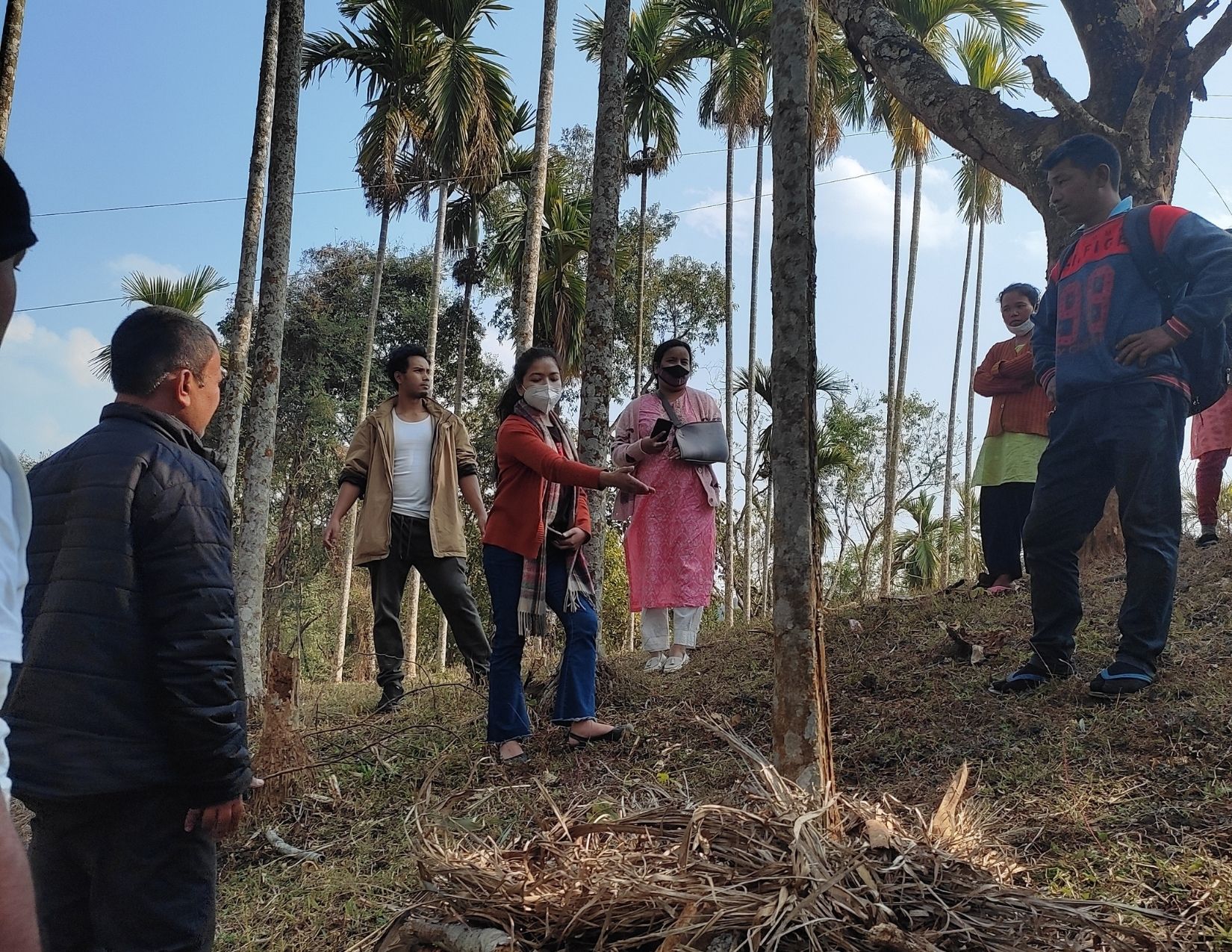
NESFAS along with Mawhiang community organised an Agrobiodiversity (ABD) Walk on April 14, 2022 with the Agroecology Learning Circle (ALC) members and school children. ABD Walk is one of our core tools that helps in intergenerational knowledge exchange, and at the same time, raises awareness about the diversity of local food plants and the richness of Mother Earth.

Comments Off on Wild leafy vegetable ‘Sohkhia Khlaw’: A highlight of Mawhiang’s agrobiodiversity walk

Learning to stand on their own little feet: Children’s Durbar in Umsawwar becomes the best platform

Youth are the pillars of tomorrow. And yet, in many communities, youth are often chided away from discussions regarding important matters for their inexperience and age. Little is done for them in terms of training so that they can be better equipped with things when they finally take up the mantle.

Comments Off on Learning to stand on their own little feet: Children’s Durbar in Umsawwar becomes the best platform

Landlessness: A ticking time bomb

On the 22nd of April 2022, the Career Guidance and Counseling Committee, Sohra Government College, organized a one day workshop themed “Indigenous Peoples’ Food Systems – A game changing solution in the context of climate change''.  The College invited NESFAS and Charlotte Milbank, a PhD scholar from University of Cambridge, to take part in the program.

Comments Off on Landlessness: A ticking time bomb