Across cultures and continents, food remains one of the most visible markers of identity. For many indigenous communities, their food systems: what they grow, preserve, and serve at their tables, reveal histories of resilience, sustenance and belonging.
NESFAS, over the past decade has devoted significant effort in working with indigenous communities from Meghalaya and Nagaland to restore and strengthen Indigenous Peoples’ food systems. One of the major initiatives of NESFAS in these communities was establishing Agroecology Learning Circles (ALCs) which provided a space for farmers to integrate Indigenous and scientific knowledge to promote sustainable farming and to share results and knowledge across ALCs.
On 16 October 2025, this ALC model received FAO World Food Forum’s Global Innovation Award: “When Farmers Lead Innovation! Innovation Award on Farmer Field School for Sustainable Agrifood Systems.” for their pioneering work in agroecology and its significance in shaping sustainable and resilient agrifood practices.
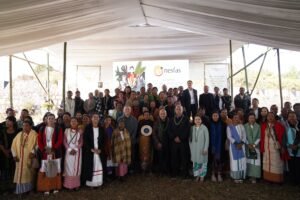
To commemorate this achievement, NESFAS brought together its ALCs, communities, partners, and supporters in Laitsohpliah, East Khasi Hills, for a gathering on 20 November 2025. The gathering, which served as a quiet but meaningful convergence of global acknowledgement and local identity was supplemented by a feast called the ‘Shifting Feast’ featuring 14 special dishes and drinks which reflected the very principles of farming that earned the award.
The menu for the ‘Shifting Feast’ was created by members of the Mawstep Primary Agroecology Cooperative Society, who also prepared and served the food through their Mawstep Indigenous Café. Communities from Nongwah, Mawpynthymmai, and Umsawwar also contributed dishes to the menu.
The feast was further enriched with creative ideas from Chef Benny Paia Dondor Wankhar and the NESFAS food services team, inspired by Meghalaya’s Indigenous food systems rooted in shifting cultivation, biodiversity care, and traditional ecological knowledge.
Aibinolin Rynjah, member of Mawstep Primary Agroecology Cooperative Society spoke of the event as a powerful learning platform: “It opened our eyes to the importance of thoughtful meal courses in food services. We have always cherished our food for its taste, but through collaboration and exposure to other experts, we realised how beautifully it can be elevated.” She said.
The dishes served during the celebration were intentionally rooted in traditional practices and co-created with community members. Here, Kong Anita Roy, NESFAS board member, who helped with the overall design of the feast area also played a major role in providing innovative take on dishes. The menu reflected what communities themselves eat, preserve, and transmit through generations, illustrating the link between daily subsistence, agroecological understanding, and collective resilience.
For example, the Ja Jasim, a traditional rice dish celebrated for its subtle flavour and deep connection to local farming systems, represented the essence of wild edibles which are both culturally significant and nutritionally valuable. The Ja Raishan dish, on the other hand, showcased the diversity of high-nutrient indigenous rice grains preserved through shifting cultivation.
Dishes like Wild Edibles Omelette, Wild Edible Salad, and Wild Edibles Fritters and drinks such as Bay Berry Juice and Calamansi Refresher were prepared using seasonal greens, shoots, fruits, and herbs gathered from forest edges and jhum fields showcasing the versatility of these indigenous communities and their food systems. On the other hand, beverages like Flemingia vestita Soup and Smilax ferox Root Tea reflected the medicinal and dietary importance of wild tubers and roots which have been long valued in indigenous healing traditions.
Some of the standout dishes like Steamed Tapioca paired with honey, tangy Tree Tomato Chutney, and the innovative Millet Brownie with Orange Toppings demonstrated how locally grown staples adapt beautifully to both everyday meals and modern interpretations.
The use of time-honoured methods is most evident in meat-based dishes. The Smoked Pork Gravy stood as a testament to traditional smoking practices, complemented by the distinctive flavour of chambil peel. Similarly, the Black Sesame Chicken dish showcased the role of sesame grown in jhum in creating deep, aromatic gravies rooted in cultural memory.
The head chef behind the feast, Chef Benny, described the experience of collaborating with the community members for the feast as a humbling learning experience for both himself and the community, “The community learned about ways to improve the taste and quality of food while I learned about their traditional ways (and methods) and what they lean on for sustenance.” He said.
At its core, the Shifting Feast highlighted the success of the ALC model, which is inseparable from the Indigenous food systems that inform it. It also bore testament to how, in Meghalaya; a region recognised globally as a biodiversity hotspot, indigenous communities continue to use food as a cultural expression and practical demonstration of sustainable land use.